
Atlas
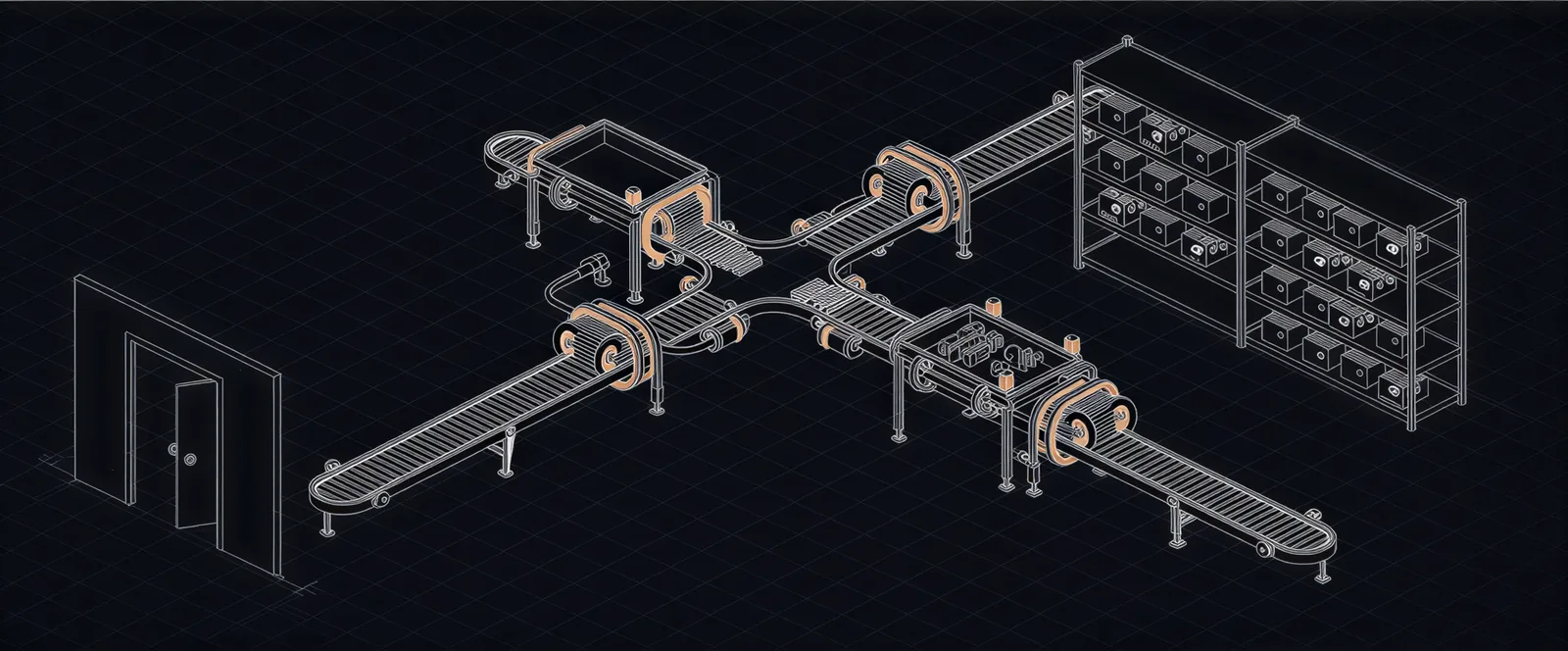
Atlas reads a repository and writes a page that says how it works: what comes in, what runs, where it lands, who reads it, what breaks what, what changed since the last map, and where to start reading. No sentence on that page is written by a person. It is derived from the workflows, the manifests, the imports, the writes and reads in the code, the tools the workflows run, and the git history, and it is regenerated whenever the repository changes.
The page is for anyone who has to understand a repository they did not write: a new contributor, a reviewer, an operator, or a model.
This repository’s own page is atlas/README.md. The site renders every mapped public repository at /atlas/: the page, a flow picture of its busiest door, a bar picture of what breaks what (production importers as a solid bar, test-only importers continuing it dashed, the doors on the path as a numeral), a strip of the weekly renders since the first, and the one line a person may write, with a link that opens the boundary file on the repository’s default branch. The specification the page is measured against is docs/atlas-page.spec.md, a page written by hand for this repository and approved before the generator existed. The engine was then run on a Python repository and a TypeScript repository it had never seen, and every sentence that misled a newcomer there was fixed at the class, with a test that fails against the previous engine.
What a page says
Section titled “What a page says”| Section | Where it comes from |
|---|---|
| What this is | The count of parts and every language in them, the ones this map does not parse (Astro, C#, HTML, CSS, shell) included, a second kind of data named beside the first, with the data named first when images, JSON data or Markdown are most of the files (“mostly images (6651 files); code in JavaScript (2), TypeScript (2) and Python (1)”); the count of doors and the busiest one: the one that commits into the repository and reaches the most parts, else the one with the greatest reach, a tie stated and broken toward the door a pull request goes through; the page states the rule when it applies. Then what the repository publishes to, the commands people run, the desktop app people install (a Tauri crate’s bin a workflow ships; otherwise “X is a desktop app built from .github repository holding profile/README.md is described as the organization’s profile page and the community-health files its repositories inherit), the game Godot runs (run/main_scene in project.godot; “the Godot project” when its name says it is a lab or a tool), “It deploys a site to GitHub Pages.” when a door deploys one, “Other repositories use the X action.” for a shipped action.yml, “People import |
| What changed since the last map | The structure just derived compared with the one committed at HEAD: new imports between parts (a new edge on a dependency cycle first), doors added or changed, places gaining writers or readers, origin flips, steps gained or lost, parts added, removed or renamed, then file counts. |
| What comes in | Every workflow: what triggers it, what its steps run and what they only check (linters, type-checkers; lint, scan and coverage actions said by what they do), what a Dockerfile it builds packs into an image, a paths-ignore trigger as “except when only the N paths it ignores change”, a job that only echoes as “runs only echo”, read by the conventions of the tools they name (npm run, pnpm and yarn scripts with their workspace filters, pytest, uv run, python -m, tsc --build, vitest, eslint, cargo with its package selection, cargo tauri, godot --script, GUT and gdUnit4 runners, gdlint and gdformat, shell scripts, Makefile targets, spawned commands, including commands a helper hands to a shell with literal text, and a run of a build output such as node dist/cli.js, traced first to the entry a bundler’s build names (esbuild, tsup, rollup, vite build --ssr) and then through the tsconfig the build names; vite build and vite dev run the app’s config and its src/, and a library’s vite build builds the entry its config names; next build and next dev run next.config.* and the app’s pages, layouts and routes; turbo run <task> runs the task in every workspace member that defines it; pnpm <tool> with no script of that name runs the tool, and vitest projects run every member’s tests; a dynamic import through a const table of paths imports every path; a local reusable workflow (uses: ./.github/workflows/…) or composite action (./.github/actions/…) is followed into its steps; subprocess calls with sys.executable -m run that module, and the imports inside a python -c step are read). Then every command a manifest installs (a bin in package.json, a [project.scripts] entry in pyproject.toml, a [[bin]] or src/main.rs in a Cargo.toml crate) and the entry of the package, said as published only when a door publishes it, each a door of its own. A container, wheel or binary build runs the file it starts (a Dockerfile’s ENTRYPOINT or CMD, traced through stages, WORKDIR and COPY) and checks the files it packs. A child process that starts a module of this repository (python -m <package>, node <file>) connects the parts; git and gh are said as “runs git”. A tracked file handed to a tool the map has no rule for is a checked run, a cd moves the rest of the step, and a job or step gated by an if on the event, the ref, its type or an input, or held off one (!=), keeps what it runs, deploys or commits to the events that remain a run by hand kept (“deploys the site on a push to main or by hand”; a gate on one event plus a run by hand reads “on a schedule or by hand”; a path several gated jobs run is held to the union of their gates, and a place one gated job writes is said under its gate; “On a pull request to main”; “when run by hand with dry_run false, it also publishes”). A publish names what it sends: a package chosen by its directory or by the tag, the VS Code Marketplace or Open VSX for an extension, nothing for a dry run; a Godot export is said as “exports the game for Linux”. A job that checks the repository out into its own path: is read from inside that directory, and a step outside it that names a path through that directory names this repository’s path; one handed to an output flag is written by the door. A fork gate (head.repo.fork, head.repo.full_name != github.repository) is read: “On a push, or a pull request from a fork, it runs …”. A cargo or Tauri build whose output a later step uploads is a build (“builds src/main.rs into MSI and NSIS installers and uploads them to the release”), never a check, and softprops/action-gh-release on a release event uploads to that release and creates none. |
| What happens through the busiest door | The parts its executed files are in, the parts reached through imports in order, the order of work inside the entry functions (only calls into this repository’s own code, written in code style), the places it writes (a written-out file name lands on that file, not its directory; a path built from the directory the command is run in, from the home directory, from a temporary directory, from a helper that returns one, from an environment variable or from an argument the caller passes is not a place here; a write into a place the repository does not track is counted, never placed, and the door names it (“writes to output/, which is not tracked”), even when git ignores it; a write skipped in CI, or behind a flag every run passes, is not credited to the door; a write behind a main guard (require.main === module, import.meta.main, process.argv[1] compared, __name__ == "__main__") is credited only to a door that runs the file or starts it as a child process, never to one that imports it; a write made only when the file is absent is a bootstrap, credited to no door and never a stamp; a write under the working directory that spells a tracked place is that place, said as “when run from the repository root, and committed”), what it commits and pushes (staging is not writing: a door writes what its reach writes and what its steps’ own redirects write, and a staged place with no writer is “written by people”), here, to a branch for review, or into a clone of another repository, what it changes in other repositories through the GitHub API, and what it dispatches, publishes or deploys. What a door only checks reaches parts but writes nothing. |
| Who reads the results | The files and workflows that read those places: code that reads or imports them, the site build that renders them, and tests, counted after the code; readers found by scanning text are marked and never counted as structure; a configuration file (a *.config.json, a manifest, a tauri.conf.json, an AppxManifest.xml) that names a tracked path is a reader of it, marked “(from configuration)”; a Markdown link, a path mentioned in prose, and a packaging list are not readers. |
| The other doors | The same facts for each remaining door, workflows and installed commands, in prose. |
| What breaks what | Parts by production import fan-in, with test-only importers counted separately, and by how many doors pass through them; places whose readers a hand edit would reach (a file its writer only stamps is never one); a part called over HTTP by another, with the count of routes. |
| What tends to change together | The strongest source-file pairs from the history, with the relation between their parts stated; a file and its own test set aside and counted. |
| What no test touches | Code parts no test file imports, directly or through one hop, including tests that spawn scripts and a package’s own npm test a workflow runs; data and site parts are never asked, and code parts the map cannot read are named as such, never counted tested. A Rust file holding #[test] or #[cfg(test)] tests its own part, and a part tested only that way is “tested only by the unit tests in its own files”; a GDScript file extending GutTest, GdUnitTestSuite or GUT’s test.gd is a test wherever it lives. A part that tests reach only by spawning its files is said as “touched by tests only through a spawn”. A test that rewrites tracked files is a writer of them, listed under Generated as “(a test)”. |
| Written but never read | Places no code, workflow or test reads, named by file. A glob or a directory loop reads every place its pattern matches; a pattern under a directory chosen at run time qualifies the claim (“read by nothing else this map can name: X reads *.log under a directory chosen at run time, which may include it”). |
| Helpers that look duplicated | Candidates from names and call order; the same name across three or more parts reads as a shared contract. |
| Generated, never hand-edited | Places with a writer in code, or in a workflow’s own shell or a staged path its steps name (a git add alone writes nothing, and a workflow that only reads and stages a place code writes is not its writer), whose commits are not mostly people’s; a writer that reads untracked inputs makes its place mixed, said under Hand-authored; a directory is “written by” its writers only when every tracked file under it is one they make, named whole or matching the shape a write spells (matrix-*.json), and otherwise “holds files written by” them; a place with one writer that keeps its own source inside is “X is written by Y, except Z, which it reads and people write”; a tracked file its writer reads first is said to have a block written by it and stays mixed, unless the read is only compared with what is about to be written, or the write happens only when the file is absent (“written once by X when absent”); a committed output of a run from the repository root is listed with that qualification; an untracked output is named on the door that writes it and never listed as generated; a crate’s build script’s gen/schemas/ is listed “(a build script)”. |
| Hand-authored | Parts nothing in the repository writes to, with the count of run-time-path writes that may land there; and places a workflow commits: those nothing writes (“written by people”) and those people commit to more than their writer (“written by X, and by people: 67 of its 68 commits in the window are theirs”). |
| Where to start | A chain of files that run, from the door a pull request goes through whenever the busiest door is not it (release, deploy and schedule triggers included), beginning at that door’s entry point rather than the first helper it names, to the first reader of its output; when that door runs only tests, the chain follows an installed command from its entry instead and says so (a Cargo example is not installed); when nothing installed can be followed and the door runs a file only for its unit tests, the chain starts at the test that reaches the most parts and says so; a Rust binary goes into its own library’s root; an arrow is never a check; a barrel is passed through to what it re-exports, except that a package’s own entry is kept when a door builds the package; a file holding one constant or one config object is never a start, and a script that imports and writes nothing is never an end; inside a part every arrow is an import or a call of the file before it: the chain goes first to a file called inside the function the file before called (a lazy import there counts), then to the file’s own calls, then to its imports, and the other files a step calls are listed beside the path (“Beside the path, X also calls …”); a path of one file is said “Start at X”; when no path exists, the widest other pull-request door that yields one is followed, and the page says why; every arrow is a recorded edge (a run, an import, a write, a read), every step names a file, files with no statements, manifests and data files are skipped, a test is passed over for the production file it imports, and the chain ends in code. A file the map records imports from, such as a Godot scene or an Astro page, is a step; where the path reaches files the map records no order among, it names them and says the path ends there. When nothing can be followed it says so, naming what the door reaches. |
| What this map cannot see | Unresolved imports (up to three named by file and specifier, with why; a repeated one said once, “twice” or “N times”), root gate scripts no workflow runs (“verify.sh runs in no workflow”), tracked files that belong to no part, test files no workflow runs, imports of paths outside the repository, declared dependencies that share a name with a local module, files the parser cannot read (named, up to three, then counted by part with the construct that stopped it), paths built at run time, writes to the directory the command is run in, the home directory, a temporary directory or a path the caller passes (said by where they go, one line per kind of place), writes to files the repository does not track, commands built at run time (with how many of them are in tests), text-scanned readers, test files a Linux shell’s expansion of a package script’s ** glob leaves out of CI, links over HTTP, writes and reads to the player’s data directory (user://), deploy files no workflow runs (an image a workflow builds and none pushes, a Hugging Face Space nobody uploads, a Docker MCP Catalog entry no workflow submits), and the confidence of the history statistics. |
Adopt it in a repository
Section titled “Adopt it in a repository”npx --yes @dogfood-lab/atlas initnpx --yes @dogfood-lab/atlas mapinit proposes atlas/boundaries.yaml: the named parts of the repository and the globs that own them. The proposal leaves no tracked file in no part: one part per project (a workspace member, or a directory with a manifest, .csproj and go.mod included) and a part for what each directory’s projects leave. Correct the names, globs and roles (code, test, docs, config, site or data) if the proposal is wrong; the one line a person may add is summary. map writes atlas/README.md, atlas/page.json, atlas/structure.json and atlas/statistics.json. Commit the folder. map --divergence <file> also writes the divergence report; a caller mapping a copy it made itself passes --name owner/repo when the clone carries no origin and --baseline <dir> holding the last committed map when the copy has none; init --force rewrites a boundary file from a fresh proposal. init also keeps the map out of what ships: it adds atlas/** to an existing .vscodeignore, atlas/ to an existing .npmignore when the manifest has no files list, and atlas/ to .prettierignore (created if needed) when prettier is a dependency or a script runs it; it never adds a line twice and says what it added.
Then run the check in the test job:
npx --yes @dogfood-lab/atlas checkIt fails when a part gains or loses a dependency, a file changes part, a new file belongs to no part, a named part matches nothing, or a file belongs to two parts. When it fails after a change you meant to make, run atlas map and commit the regenerated atlas/ files with the change; never edit the page by hand, and never change the code to satisfy the map. A repository with no atlas/ folder is a notice and exit 0, so adopting Atlas reddens nothing. The codes it prints are listed on the error codes page.
A new file in no part is the failure people meet most often: a folder that keeps receiving files, such as receipts or data packs, with no part to hold them. check prints the boundary lines that fix it, ready to paste, and map warns about such a folder before CI does. Stage new files before you run map, because a map made first leaves them out.
In GitHub Actions, check also emits annotations and writes a step summary:
- a failure is an
::erroron the file it names, from the repository root, on line 1 when it is about the whole file; - a door notice is a
::warningon the line it was read from; - the summary holds the finding and the fix.
So a red run shows its cause on the pull request, not only in the log. Outside Actions the output is unchanged.
Run atlas check in one job of one matrix leg, for example with if: matrix.node-version == 22. Each run annotates the pull request, so a check on every leg puts every annotation on the diff once per leg: four or five times over on a two-leg matrix run on both push and pull request.
check also prints notices: facts that leave the exit code alone. Two are about a workflow. ATLAS_DOOR_TOOLCHAIN: a job pins a Node version that the tool a step runs does not accept, read from the pin and from the tool’s engines in the lockfile of the step’s directory (“Deploy site pins Node 20 and runs astro build; astro 7.3.3 requires Node >=22.12.0 and refuses to start.”). ATLAS_DOOR_LOCKFILE_PLATFORM: a job runs npm ci on a platform for which the lockfile holds no native binding, the mark of a lock written on another system. A third, ATLAS_MAP_ENGINE_OLDER, says the committed map was made by an older Atlas than the one running. Each names the lines it was read from and what to do, and check --strict exits 1 when there is any notice. The door checks read committed files only and never predict a run; what they could not judge (no setup step, a version only a run can know, a self-hosted or container runner, a lock they cannot read) is said as not judged, never as a finding.
Ask about a file or a part
Section titled “Ask about a file or a part”npx --yes @dogfood-lab/atlas explain packages/ingest/persist.jsexplain says what a file, a directory or a part is in the system, for a person about to edit it or an agent in a coding session: its part, the doors that run it, build it into a binary or pass through its part, what it imports and what imports it (a manifest it loads is listed under what it reads, never under what it imports), its own test, where it writes and who reads that, the order of work inside it, and what it changes with. Given a place that code writes or reads, it says who writes it and who reads it. --json gives the same facts as fields. It reads the committed map and never maps again, so it answers at once and names the commit it describes. Given a workflow file, it prints the door: what triggers it, each job with its runner, environment and pinned versions, its steps and the programs they run, what it sends, what it reaches, the permissions it asks for by name, and any finding on it.
With --ref <ref> it answers from the map at a ref the clone already holds, such as origin/main: files are read at that ref, nothing is fetched, and the last line says which ref answered and how far it is from the checkout. When the checkout has no map and its fetched upstream holds one, the message names that ref first. In a directory that is not a git repository but holds atlas/, it answers and says “an exported tree: history and freshness not checked”.
Ask what no test reaches
Section titled “Ask what no test reaches”npx --yes @dogfood-lab/atlas gapsnpx --yes @dogfood-lab/atlas gaps packages/ingestgaps says what no test reaches and what should reach it, for the repository, a part, a directory or a file. It reads the committed map alone, or with --ref <ref> the map at a ref the clone already holds: it never maps, writes nothing and makes no network call.
It gives the facts first:
- what CI runs, and the runner behind each run;
- which parts and files tests reach, and how: a test imports the file, runs it, holds tests a runner finds in it, or spells its name in a string Atlas cannot follow;
- the code gaps, ranked: on the path of a door that ships or runs in CI first, then fan-in, changes and failure paths. Five are shown, with a count of the rest.
- apart from them, the test files no workflow runs, coverage CI does not collect, and the installed commands nothing runs.
Then the suggestions. Each names its rule, the facts that triggered it and the source of what it suggests: the house standard first, then what the fleet does, then outside documentation.
| Rule | Fires when |
|---|---|
| G1 | A code part no test reaches is of a kind no runner here tests: a first test of its entry. |
| G2 | Test files no workflow runs: how the runner they are written for would collect them, or, for a test script that fails by itself (test_*.mjs and kin, or a Python test that exits 1), the command that runs it. |
| G3 | A command the repository installs, which no test runs and no workflow starts: an end-to-end test that runs it as a person does. |
| G4 | CI runs a language’s tests and collects no coverage: the studio’s coverage recipe. |
| G6 | A code file no test reaches holds failure paths: tests that make them run. |
Reach is not proof a test exercises a file, so Atlas says “no test imports or runs this”, never “untested”. Where it cannot see enough it says so and stays silent: while a test step’s runner cannot be named, and for a file whose name a test spells in a string. Every rule was held to a precision bar over the 79 fleet repositories: wrong at most once in ten, overall and for each kind of code it fired on five or more times. G1 and G2 fired fewer than 20 times and are provisional. The record is docs/atlas-test-gaps.fleet-check.md. --json prints the same answer as fields.
Ask from an agent
Section titled “Ask from an agent”atlas mcp lets an agent ask the same questions during a session, over the Model Context Protocol. The agent’s client starts it on stdio, for the repository the agent works in.
npm i -g @dogfood-lab/atlasclaude mcp add --scope user atlas -- atlas mcpAny other client starts the same command, atlas with the argument mcp. On Windows a global npm command is a .cmd file, which a client cannot start directly, so give the client cmd /c atlas mcp, or node with the package’s cli.js and mcp.
One server can answer for several repositories, fixed when it starts. Every tool but atlas_repos takes repo, which names one of them by its absolute path or its folder name, and atlas_repos lists them.
- With
atlas mcp --repos <file>, the file names them, one path per line, absolute or relative to the directory the file really is in (links resolved), with#comments; a path that starts with#is written./#name. Each path must be the top of a git repository, or a directory holdingatlas/structure.json. The client’s roots are logged and not used. A file with a problem stops the server before it serves anything, with every problem listed (ATLAS_SIDECAR_REPOS_FILE). - Without it, they are the repository the server was started in and those of the roots the client offers at initialisation, at most 32; any past that are dropped and logged. A client root inside a git repository answers for that whole repository, and a call that names no repository answers for the first root the client offered, both as before. A tree exported without its history is a root only at the directory that holds its map: started inside one, the server names its top.
atlas_repossays where each root came from. - The roots never widen. A client’s later change to its roots is logged and not used.
- Each is resolved once to its real path and compared exactly, with links and junctions resolved, so a junction retargeted later changes nothing. On Windows the real path carries each name’s case as it is on disk, so two repositories whose paths differ only in case, in a directory with case sensitivity turned on, stay two, and a path that matches a root only in case is refused. A network path, a mapped drive’s included, is never a root.
- git runs in the root’s real path, without any variable that would point it at another repository (
GIT_DIR,GIT_WORK_TREEand the like), andshowanddiffrun no textconv filter or external diff. - Anything else is refused: another repository, a subdirectory or a relative path (
ATLAS_SIDECAR_REPO_NOT_ALLOWED), and a name two roots share (ATLAS_SIDECAR_REPO_AMBIGUOUS). With--repos, a call that names no repository is refused too when the list leaves out the directory the server started in. - With more than one root, every answer names its repository first.
| Tool | What it answers |
|---|---|
atlas_overview |
The repository: its parts, every door with its trigger, what it runs and sends and how far it reaches, the runtime of its jobs and any finding on it, the main flow, and where to start reading. |
atlas_explain |
One file, directory or part, as atlas explain answers it, including who writes and who reads a place. A workflow file is answered as its door. |
atlas_reach |
What a change to given files reaches: the doors that run them or pass through their part, and the files and parts that import them or read what they write, production and tests apart. |
atlas_changes |
What changed structurally between the map committed at a commit and the map it answers from: imports between parts (a new cycle first), doors, writers and readers of places, parts, and new files in no part. |
atlas_check_change |
What a change does before it is committed: the tests that reach the changed files, the doors that run them, imports between parts gained or lost, files in no part, and whether the map must be regenerated. For each changed code file it says how tests reach it, or that none does and the failure paths it holds as it is now. It reads only the changed files again. A changed manifest, workflow, boundary file or configuration the engine reads, or a deleted file, gets “a full refresh is needed” instead. When a workflow, a package-lock.json or a package.json is among the changed files, it also gives the findings on the doors they touch, read from the tree: the moment before a push. |
atlas_test_gaps |
What no test reaches and what should, as atlas gaps answers it: facts in groups of one basis, then the suggestions apart. |
atlas_refresh |
Maps the checkout again in the background, into a cache outside the repository. Later answers use the new map once it is complete, and calling it again reports progress. |
atlas_repos |
The repositories the server answers for: each one’s name and path, where it came from, whether it answers a call that names no repository, the commit and engine of the map it answers from, and how many commits its HEAD holds that the map was not made from. |
Every answer begins with where it came from: the map’s commit, the Atlas version that made it, and any file it names that changed after the map. Every tool but atlas_refresh and atlas_repos takes ref, a ref the clone already holds: the answer then comes from the map at that ref, files are read at it, and the provenance names the ref, its commit and how far it is from the checkout (atlas_check_change takes it only when the checkout holds the commit that map was made from). When the fetched upstream holds a different map and commits the checkout lacks, the provenance says so and names the ref to ask with; Atlas never switches by itself. In a directory that is not a git repository but holds atlas/, the tools that only read the map answer and say “an exported tree: history and freshness not checked”. Every fact carries its basis (parsed, declared, text, weak, history, unresolved or outside), and every answer lists what Atlas cannot see for that question. An answer is at most 8 KB of JSON, or 64 KB with full: true, most important first. A list cut to fit says so, and a cut list carries a cursor for the rest, at the top of an answer and inside an entry too large to show whole. part keeps the entries in one part, and kind keeps one kind of fact. A failure is a tool error with the same fields the CLI prints: the code, one sentence, what changed and what to do.
The sidecar only reads. Git runs only read commands, with optional locks and the filesystem monitor off, so a question never writes into .git. Nothing goes over the network, and there is no model inside it: every sentence comes from the map. atlas_refresh writes only to its cache, %LOCALAPPDATA%/atlas on Windows and otherwise $XDG_CACHE_HOME/atlas or ~/.cache/atlas, and refuses a cache inside the repository. It is a local process; the container does not run it.
See the delta on every pull request
Section titled “See the delta on every pull request”npx --yes @dogfood-lab/atlas diff --base origin/maindiff compares the committed map at a base ref with a fresh map of the working tree and prints the “what changed” section as markdown or JSON, writing nothing. This repository’s CI runs it on every pull request and posts the result as one comment, updated in place, so a reviewer sees “ingest now imports dogfood-swarm” or “nothing structural changed” before reading the diff. The step never fails the build; on a fork it prints to the job log and summary instead.
Public repositories under dogfood-lab and mcp-tool-shop-org that have committed an atlas/ folder are rendered weekly onto the atlas-render branch and appear on the site. Beside the fleet list the render writes an index for agents, llms.txt, with one line per repository linking its page as markdown and as page.json, so an agent that runs no script can still read every page. The site’s own llms.txt and the Atlas page’s message for readers without JavaScript point to it, and each render removes the files it no longer writes. A private repository uses the workflow template shipped in the package, templates/atlas-refresh.yml, and nothing leaves it.
Run it for a private fleet
Section titled “Run it for a private fleet”For repositories that must not leave your machine, the same engine ships as a container with persistent memory, ghcr.io/dogfood-lab/atlas, whose default command is atlas-fleet. It maps the repositories you list in fleet.yml, by mounted path or clone URL, once at start and then on a schedule, keeps every render and its history on a volume, and serves the same fleet list and per-repository pages as this site, with the agent index at /llms.txt, on a port of your choosing. Nothing leaves it except git fetches of the repositories you listed. The same image runs the CLI on a single mounted repository, with the CLI’s exit codes passed through, so it can stand in for npx in a job that has no Node.
mkdir -p atlas-data reposcp docker/fleet.example.yml atlas-data/fleet.ymldocker compose -f docker/compose.example.yml up -datlas-data is the memory; deleting it is the only way to forget.
What it reads
Section titled “What it reads”- Doors. Every workflow under
.github/workflows/: triggers, the files its steps run and the files they only check (eslint, ruff, mypy, black, flake8, pylint, bandit, and a tsc that emits nothing; a tsc that emits to an outDir, tsup and a library’s vite build are builds) by the conventions of the tools they name, what it stages and pushes, here or in a clone of another repository it made in the step, what it dispatches, publishes (npm, PyPI, crates.io, RubyGems, a container image, the VS Code Marketplace, Open VSX, the Hugging Face Hub, a record on Zenodo), releases or deploys, and the issues or pull requests it opens. Every command the root or a workspace manifest installs (bininpackage.json,[project.scripts]inpyproject.toml;[[bin]],src/main.rsandsrc/bin/*in aCargo.tomlcrate, a Tauri crate’s bin as the desktop app people install,run/main_sceneinproject.godotas the game) and the entry of a published package, as doors of their own; the file each names is an entry point of its part. A tracked file handed to a tool with no rule is a checked run; acdmoves the rest of the step;astro build,vite buildandvite devrun the site’s config andsrc/; a job or step gated by anifon the event, the ref, its type or an input keeps its runs, sends and stages to that trigger.pnpmandyarnscripts resolve likenpm run, workspace filters included; a run of a build output (node dist/cli.js) is a run of its source, placed through the entry a bundler’s build names (esbuild--outfile/--outdirand itsbuild()calls, tsup-d, rollup-o/-d,vite build --ssr), then through the tsconfig the build script names, and never through what is on disk; a helper that hands literal command text to a shell is followed one level;docker build,python -m buildandpyinstallerrun what they start (a Dockerfile’sENTRYPOINTorCMD, traced through stages,WORKDIRandCOPY) and check what they pack; syntax checks (node -c,py_compile,bash -n) are checks; a job held off an event with!=keeps its sends to the events that remain; a push to a branch the job made, or to a branch kept for its own sake, is said as such and never as a commit into the repository; a package entry is a published door only when a door publishes it, and everyexportssubpath is named. A glob in a package script is expanded the way the job’s shell expands it (**is one directory level undersh; unexpanded under cmd), and the files it leaves out are reported; a test runner’s glob over built output (node --test dist/**/*.test.js) runs the sources it was built from;node node_modules/<tool>/…is that tool; among doors reaching as far, the pull request’s wins whatever it runs, and the tie sentence names every tied door. A shellforover literal words is unrolled, and aforover a glob of tracked directories is expanded, so each package it publishes is named, private members skipped and apnpm packtarball read as its package;pnpm publish --filternames its members, each a package door of its own; a bash arrayNAME=( … )is one assignment, never commands; agit addis neither a write nor a read, and what a step’s own redirect orteewrites, followingcd, is the door’s; a package whose every exported file starts a program as it loads is its entry and no library; a private workspace member’s bin is a command bundled into the package that names its built path.cargo testandnextestexecute test targets and the files holding their own unit tests,cargo runandbenchexecute,build,check,clippy,doc,fmtandinstallare checks, except that a binary a later step uploads or packages is built, every subcommand butfmtruns the crate’s build script, and each Cargo example is a door run withcargo run --example, with Cargo’s package selection (-p,--workspace,--exclude,--manifest-path,default-members) honoured;cargo tauriandtauri build/devrun the crate after itsbeforeBuildCommand; the godot binary is recognised by its path,--scriptexecutes, GUT and gdUnit4 run tests,gdlintandgdformatcheck, and an export is a send (“exports the game for Linux”); a job that checks the repository out into its ownpath:is read from inside that directory. A shipped rootaction.yml, or a.github/actions/*action no workflow here uses, is “an action other repositories use”; the bins of a manifest outside the workspace that a workflow publishes or works in are doors; aworking-directoryholding a matrix value or a dispatch input is each directory it can be; a path spelled from$GITHUB_WORKSPACEis this repository’s;npm run <script> <args>hands the args on;dotnet testruns its project anddotnet build/publishare builds;python -m unittest discoverruns its start directory, a Python loop over a literal list of commands runs each, and filesconftest.pykeeps out of collection are no tests; a publish of a"private": truemanifest sends nothing. Each job’s runtime is recorded: the runner labels and the platform they mean (a self-hosted or container runner is left unresolved), the environment by name, the versionsactions/setup-nodeandactions/setup-pythonpin, a version file read where one is named, and the directory each command runs in. A trackedpackage-lock.jsonis read for the two door checks: theenginesof the tool a step runs, and which native bindings the lock holds. - Parts and imports. JavaScript, TypeScript, TSX, Python, Rust and GDScript, parsed with tree-sitter; imports resolved with the rules the runtime uses, including workspace package exports without
node_modules, tsconfig chains from tracked files only, Python source roots (setuptoolspackage-dirandpackages.findwhereincluded, and a module beside a script outside any package) and declared dependencies known by the names they are imported under (python-docxisdocx), and dynamic imports with literal names. Resolution does not depend on what is installed. A drive-letter, absolute or~path is external on every host and never read from disk, so the same commit maps the same everywhere. Workspace members declared inpackage.jsonworkspacesorpnpm-workspace.yamlresolve from the manifests with nonode_modules; a bare name no manifest declares, aworkspace:spec with no member, and a missingfile:orlink:spec are each counted unresolved with their reason, never dropped. When a file fails to parse it is parsed once more after a rewrite that keeps every byte offset (typeof import(…)andimport(…).T[]become underscores with the specifier kept as an import; a bare&in JSX text becomes a space; a raw NUL byte becomes a space;abstractused as a name, a<with a space on each side on a failing line, and a decimal character reference past five digits are rewritten), kept only when the whole file then parses. Every file is read as git stores it: CRLF becomes LF in a text file unless the repository’s own tracked.gitattributessays otherwise, so a checkout withautocrlfmaps identically to one without. A client file’s/…paths matched against a server file’s routes are an edge of kindhttp. Rust imports follow the module tree as rustc builds it:modresolves toname.rs,name/mod.rsor#[path],usethroughcrate,self,super, child modules,path =dependencies and the package’s own lib; other declared crates and std are external, an undeclared crate is unresolved, andinclude*!macros are reads. GDScript resolvesres://from the project root:extends "…"andpreloadare static imports,loadwith a literal or a const a dynamic one, a scene’s[ext_resource]lines make scripts and scenes imports and other resources reads, and aclass_nameor an autoload is a global name. A crate is a part of its own andinitproposes one per crate; aproject.godotdirectory is a part. An Astro file’s frontmatter is read for its imports; afile:dependency on this repository’s own package resolves to it;import(pathToFileURL(x).href)is an import ofx; a directory added withsys.path.insertorappendis looked up first; a namespace package and a lazy-import table (importlib.import_moduleover a dict of module names) resolve; apackage-dirmapping resolves[project.scripts]targets. - Landing places and readers. The tracked paths that code writes to and reads from, found in call expressions and followed through joins and helpers; raw GitHub URLs and quoted paths in files it does not parse, marked as found by text; shell scripts’ and workflow steps’ redirections and moves. A bare filename written through a variable root, or an open prefix, is recorded weak and never makes a place look generated. A written-out path that names a file lands on that file, not its directory, and the places a door writes inside one part are named by the deepest directory they share. A path built from the directory the command is run in (
process.cwd(), a relative path resolved at run time,dir || ".") from the home directory or from a temporary directory (tmpdir(),mkdtemp,tempfile.mkdtemp,gettempdir) is counted outside; a write into a place the repository does not track is counted, never placed, and named on its door; a tracked file whose writers read it first has a block written by them, unless the read is only compared with what is about to be written; a write guarded against CI, behind a flag every run of a door passes, or behind a main guard the door never runs the file through, is not credited to that door; PythonPathjoins are followed. Markdown links and packaging lists are not readers; an import of a written module and an Astro site’s content directories are. A path from a helper that returns a home or working directory, from an environment variable, or from an argument the caller passes is counted outside as well; an import ofpackage.jsonorpyproject.tomlis a read of that file, not an edge between parts; a test’s reads are readers, marked as from tests; in Markdown only what its code spans and fences read counts, never a path in prose. A path built fromprocess.argvor a CLI-arguments object is the caller’s, values destructured from it included; a named inner function is read once per call with its parameters bound to what each call passes; a write guarded by!existsSync, an early return when the file exists, or the catch of a read is a bootstrap; a write under the working directory that spells a tracked place lands there, marked as from the working directory; in an argument list a path joined from a repository-root constant reads as that path; PowerShellCopy-ItemandMove-Itemare a read and a write,Get-Contenta read,Set-ContentandOut-Filewrites. Afor-ofover a literal array binds each element to its name and an object’s properties to their destructured names; a reader of a written file’s parent directory reads the file; an installed command’s working-directory writes are the user’s even when a workflow also runs the file. Rustfs::write,create_dir*,copy,rename,File::createandOpenOptionswith write are writes,read_to_string,read,read_dirandFile::openreads, followed throughPath,PathBuf,.join,let,constandCARGO_MANIFEST_DIR; clap and argh fields are the caller’s. GDScriptFileAccess.openby mode,ResourceSaver.save,DirAccessandsave*calls onres://paths land here;user://is the player’s data directory, counted apart.sqlite3.connectopens its file for writing, and a test that restores a file is not its writer; anhref,link,urlortovalue in a JavaScript object is a link, never a read; a literal argparse default is a path from where the command runs, and Python parameters settle through calls as JavaScript’s do; a local action’swith:inputs are filled in, and a job that only names a file reads it. - The order of work. For the files a door runs and the files they call into, the cross-file calls of each entry function in order, with calls inside inline callbacks counted where they sit, same-file calls spliced in place, and constructed objects’ method calls named with their class. A callback handed to a registrar (
server.tool(…),.on(…)) is not a step of the function that registers it, and an early return is said once as an alternative (“Or, when the query is empty, X does … instead.”). - Test runs. Each step that runs tests is kept on its workflow in
structure.jsonwith the runner that runs them, followed through the package scripts, shell scripts, makefile targets and local reusable workflows or composite actions on the way (npm run verifythennpm testthen Vitest): Vitest (its--dir,--rootand config), Jest, Mocha, node –test, pytest, unittest, cargo test and nextest, dotnet, deno and bun test, GUT and gdUnit4, and a test file node or python runs directly. Playwright, go test, tox, nox, AVA, tap, uvu, bats, Cypress, Karma andvscode-testare named from the command alone. Each run says where it runs, the configuration it read, and whether it collects coverage (the runner’s flag or configuration, a c8, nyc orcoverage runwrapper, a step’sNODE_V8_COVERAGE) and writes JUnit results (a junit reporter on the line, in the configuration or inNODE_OPTIONS). A step named for tests, or one whose chain passed a script or target named for them, that reaches no runner Atlas can name is kept as not attributed, never dropped. Each part records the runners whose CI tests sit in it or reach it, and the map lists the test files no workflow runs, from every path the steps run. What tests reach is read from the map: a file a test imports, directly or through the files it imports; one a test runs as a child process, by its path or by the command a manifest installs it as; and one holding tests a runner finds in it, as cargo test finds a#[cfg(test)]module. A mocked import is still an import, and a test-shaped file among fixtures is data that reaches nothing. - Packages. Every tracked
package.jsonis recorded with one role, and how the role was known: the root manifest, a member of the workspace (workspacesorpnpm-workspace.yaml), a directory a door’s step installs (npm ci,npm install,pnpm installoryarn, throughworking-directory,cd,--prefix,--dirand--cwd), or other, such as a fixture.- Each dependency it declares is recorded with its package URL (
pkg:npm/name,pkg:npm/%40scope/name), its range, and its kind: registry, workspace, file, link, git or url. Annpm:alias is the package it names, with the alias kept beside it. A git dependency gives its repository ashttps://host/owner/repo. - The version comes from the tracked
package-lock.json(v2 or v3) orpnpm-lock.yaml(v6 or v9) that installs the manifest, never from what is installed, so a clean clone, an installed tree and a built one map alike. For a git dependency it is the commit the lock pins, and the package that commit holds. Where no lock here can say, the version is unknown and the reason is given. - Each non-private manifest a door publishes to npm, a job an
if:holds included, is recorded with its version, the repository it names, and how the publish found it: named, found by a loop over a glob, every member of the workspace, or the one package under a directory that the tag or the run picks. - Each JavaScript or TypeScript file lists the packages its bare imports name, a subpath counted against its package, each with the manifest whose declaration covers it. Node’s built-ins are told apart by a list fixed in the engine (Node 22’s), so a map is the same whichever Node draws it. A specifier that only looks like a package is left out and counted in statistics.json (
packageImports): a package’s own#import, a name npm’s rules reject (@/lib,$lib), and a name the resolver found inside the repository that no manifest declares and that is no workspace member (apathsalias), which is already a file edge. - Each of those imports is also recorded in
importNames: the package, the specifier as written (a subpath says which file of it), the line, how it was written (import,reexport,requireordynamic), and the names it takes. A name is the name the module exports, never the local alias (ainimport { a as b });defaultis the default export and*the whole module, or names the tree does not tell (a barerequire, animport()used some other way). A name only used as a type is markedtype: true(import { type D }, or every name of animport type), and the site istypeOnlywhen every name is. A site that takes more than 50 names says*and the count, and a file keeps at most 200 sites, saying how many it left out. Relative imports are file edges already and are not recorded here, and theimport name = require()form, which the extractor makes no site for, is not read.
- Each dependency it declares is recorded with its package URL (
- History. Files that change together over the last 180 days. The shared-commit floor falls to 3 when fewer than 20 source files reach 10 revisions and rises back to 10 only at 25, starting from the floor the previous map used, so a repository near the line does not flip between maps; the window line states the rule and the confidence is stated on the page.
What it cannot see
Section titled “What it cannot see”A door check that could not judge says so and makes no finding: a job with no setup step, a pin only a run can know (lts/*, latest, an expression), a self-hosted or container runner, a lockfile it cannot read. The door checks read package-lock.json only; the package facts read it and pnpm-lock.yaml. A version a yarn.lock, a bun.lock, an npm-shrinkwrap.json or a version-1 lock would give is recorded as unknown, with the reason, and so are the members of a publish whose packages only a run decides. A type-only import is not yet told apart from one that runs.
Paths built at run time are counted, not named. Imports that do not resolve are counted, and a declared dependency that shares a name with a same-named local file, or a directory on a source root, is said to be the dependency. Commands whose arguments are built at run time are not followed, and the page says how many of them are in tests. A file the vendored grammar cannot parse is named, up to three, then counted by part with the construct that stopped it. Imports of paths outside the repository, writes to files it does not track, and writes to the directory the command is run in, the home directory, a temporary directory or a path the caller passes are counted and said by where they go; a write whose path is a function parameter is settled from the calls that parameter is given, up to three hops, in JavaScript and TypeScript, and in Rust through struct fields and parameters, four hops; in Python it is still counted among those built at run time. A claim that nothing writes, reads or imports is qualified by the count of files the parser could not read; the rewrite pass lets it read typeof import(…), import(…).T[], a bare & in JSX, a raw NUL byte, abstract as a name, a spaced < comparison and a long decimal character reference, but a construct spread over lines stays unread. A package script’s glob is expanded as the job’s shell would, and the test files that expansion leaves out of CI are listed. Links over HTTP between a client and a server in this repository are drawn as edges; GDScript writes and reads to user:// are counted apart as the player’s data directory; Rust method calls on values are not followed for the order of work, and calls by path inside a macro’s arguments are; deploy files no workflow runs are named: an image a workflow builds and none pushes, a Hugging Face Space nobody uploads, a Docker MCP Catalog entry no workflow submits. Type-only imports count as imports. A runner named from the command alone runs tests the map cannot list, and whether it collects coverage is not read; a script a script runs is read no further, so a chain through two scripts ends there, not attributed. That a test imports or runs a file says it reaches the file, not that it exercises it: a test that mocks a module still imports it.
The map as a gate
Section titled “The map as a gate”This repository runs atlas check in its own CI and in npm run verify, and the pull-request comment on every change. The check found two things in its first days, a test that loaded a module through a computed dynamic import and a resolver that depended on whether a site’s node_modules was installed, and both were fixed at the class, with fixtures that fail against the previous code.
The dogfood swarm reads the map too: swarm init drafts a run’s domain map from the parts and refuses a draft that leaves a file in no domain or in two, every lane’s brief carries its parts’ “What breaks what” rows and explain for its entry points with the “cannot see” list beside them, swarm verify runs atlas check and records the structural delta of an amend wave, and swarm advance stops on a delta nobody asked for. A repository without a map swarms from the hand template exactly as before.